
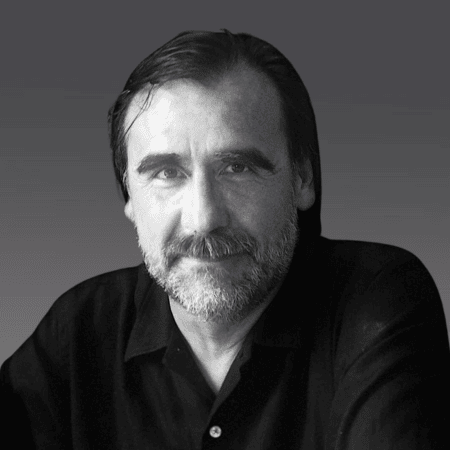
 Alejandro Martinez Galindo
Also on Vimeo: watch this conversation on Vimeo.
About this conversation
A CIO Talk Network conversation with Alejandro Martinez Galindo, Chief Information Officer, Fortrea, hosted by Sanjog Aul. Recorded February 2025.
How do leaders ensure velocity without recklessness, and what structures should be in place to prevent scale from turning into instability?
The pressure to move fast has never been greater: leaders must accelerate digital transformation, deploy AI-driven efficiencies, and launch new business models faster than ever. But unchecked speed can create strategic drift, unmanaged risk, and operational chaos. How do leaders ensure velocity without recklessness, and what structures should be in place to prevent scale from turning into instability?
What the conversation established
Alejandro Martinez Galindo, Chief Information Officer at Fortrea, opened with a cloud ERP implementation at a multinational retailer that was so large the instance had to run on bare metal, and said the plan left out recovery time. He described the organization he runs at Fortrea as molecular: platform teams that report solid line to the presidents of business divisions as well as to him, sharing hard objectives such as market share, sales volume, quality and productivity. He rejected the two-speed IT that Gartner described in favor of multi-speed teams, each matched to the speed of innovation its business needs. Fortrea made democratizing ML and AI a management statement, ran mandatory training across the whole enterprise the way it runs compliance training, and added white glove face to face onboarding and prompt engineering coaching by domain. Agentic AI and automation started at the edge rather than the core, in infrastructure and runbooks and then in finance, HR and commercial, moving from basic robotic process automation to orchestration to hyperautomation. A senior management council, not the CIO, decides where the technology is applied. He called risk tolerance early days, said the average age of his user community is around 36 and that younger staff push for more, and described pragmatic innovation tied to value, with a 90 to 120 day product roadmap and a technology radar run by his CTO.
Contributors
- Alejandro Martinez Galindo, Chief Information Officer, Fortrea
Host: Sanjog Aul, Founder and Host, CIO Talk Network
On this page: Key takeaways · Chapters · Explore more · Transcript
Key takeaways
- Recovery time belongs in the plan before you push for speed. Alejandro Martinez Galindo of Fortrea described a cloud ERP implementation at scale for a multinational retailer where the instance was so massive it had to run on bare metal, which brought software, database and integration issues. He said the recovery time was the part they had not included in their plans.
- Two-speed IT is not enough, teams have to run at several speeds at once. Martinez Galindo said he does not believe in the two-speed IT that Gartner talked about years ago; at Fortrea he uses different squads, teams and platforms for different projects and domains so teams can work at different speeds with different technologies and objectives.
- Platform leaders report solid line to business presidents, not dotted line. In what he calls a molecular organization, Martinez Galindo has Fortrea platform leaders reporting solid line to the presidents of specific divisions as well as to him, sharing hard objectives such as market share, sales volume, quality and productivity. He calls it a way to put the skin in the game.
- Set guardrails, not gates, so teams innovate with confidence. Asked what he would recommend to other CIOs facing a mandate to move fast and return ROI quickly, Martinez Galindo said make sure you set the proper guardrails and that you are not building gates, and create the framework that lets the team innovate with confidence.
- ML and AI training at Fortrea is mandatory for the entire enterprise, not just IT. Martinez Galindo said democratizing ML and AI is a statement in Fortrea’s management paper, so the company runs mandatory ML and AI training across the enterprise the same way life science runs compliance training, and adds a white glove program of face to face onboarding and prompt engineering training by domain.
- Apply agentic AI at the edge first and leave the core alone. Martinez Galindo said Fortrea chose by design to innovate at the edge rather than the core, starting with agentic infrastructure and runbooks, then finance, HR and commercial, and moving through a maturity model from basic robotic process automation to orchestration to workflow automation to hyperautomation.
- A senior management council, not the CIO, decides where AI gets deployed. Governance at Fortrea sits with a senior management council, Martinez Galindo said, because a model that was not trained properly or the wrong data set produces false positives and hallucinations, and the business cannot be put in a non compliant situation.
- Change management, not the technology, is the biggest obstacle. Martinez Galindo requires each platform owner to diagnose the level of maturity of the teams and the business before deployment, because otherwise, he said, you end up with fantastic technology that shines but is never used or stops at a pilot.
- Risk tolerance has not moved yet, but a workforce averaging 36 is pushing on it. Martinez Galindo called it early days and said he has seen no drastic change in Fortrea’s risk tolerance, with quality, organization and compliance in front. He added that the average age of his user community is around 36 and that if the agenda does not match this generation’s values they leave, which makes talent retention a reason to innovate.
- Innovation is pragmatic, tied to value, and planned in 90 to 120 day increments. Fortrea does not innovate for the sake of innovation or across the whole enterprise, Martinez Galindo said. Platforms carry a fixed and a variable part, the next 90 to 120 days of products and services are agreed in lockstep with each function’s senior vice president, and a technology radar run by his chief technology officer scans the sector, M and A activity, startups and universities.
Chapters
- 0:00 Introduction: the speed of innovation paradox
- 2:07 A cloud ERP implementation that moved too fast (Alejandro Martinez Galindo, Fortrea)
- 5:14 Build a system that learns and adapts (Alejandro Martinez Galindo, Fortrea)
- 6:15 Creating the conditions to innovate with guardrails (Alejandro Martinez Galindo, Fortrea)
- 9:11 The molecular organization and multi-speed IT (Alejandro Martinez Galindo, Fortrea)
- 12:33 A high performance team with shared objectives (Alejandro Martinez Galindo, Fortrea)
- 14:27 Democratizing ML and AI across the enterprise (Alejandro Martinez Galindo, Fortrea)
- 19:38 Innovating at the edge, not at the core (Alejandro Martinez Galindo, Fortrea)
- 21:52 From robotic process automation to hyperautomation (Alejandro Martinez Galindo, Fortrea)
- 23:42 Governance, responsible AI and compliance in life science (Alejandro Martinez Galindo, Fortrea)
- 27:20 Reading maturity and change management before pushing (Alejandro Martinez Galindo, Fortrea)
- 33:32 Risk tolerance in the age of AI (Alejandro Martinez Galindo, Fortrea)
- 36:48 New muscles: learning, advisory boards and academia (Alejandro Martinez Galindo, Fortrea)
- 42:40 Pragmatic innovation and the technology radar (Alejandro Martinez Galindo, Fortrea)
- 47:07 Advice for a CXO who is losing the grip (Alejandro Martinez Galindo, Fortrea)
Explore more
- The CIO as the Conscience of AI: Earl Newsome, Chief Information Officer, Cummins; Viren Shah, Chief Digital and Information Officer, AGCO
- AI Agents in the Wild. Who Signs the Incident Report?: Aarti Singh (Mahindra Group)
- Bridging the AI Readiness Gap: Miro Humer (Case Western Reserve University)
- Reimagining the IT Team: People, Culture, Leadership: Dominic Redmond, Chief Information Officer, PageGroup
- How Risk-Aware Leaders Build What Lasts: Dr. Ramesh Gopal
- The Future of Leadership: Is Traditional Hierarchy Holding Us Back?: Alexandre Kozlov (ABB), Andrea Heekelaar (Renault), Mahendra Beharie (DHL Express Sub-Saharan Africa)
- Low-Code AI Apps: Enabling Innovation, Ensuring Control: Udit Pahwa
- Agile Mindsets: Beyond IT to Boardroom Strategies: Brian Stewart, Chief Information Officer, Simon Fraser University; Jene Olive, Chief Information Officer, John Hancock; Mario Lebar, Chief Information Officer, University of Manitoba
- Bimodal IT: Challenges and Lessons Learnt: Sahal Lahar, Executive Vice President and Chief Information Officer, Brooks Brothers
Transcript
Introduction: the speed of innovation paradox 0:00
Sanjog Aul [00:00:05]:
Hello, everyone. Welcome to CTN. To learn more about us, please visit ciotalknetwork.com. The topic for today is rather an interesting one. It’s the paradox of speed: scaling innovation without losing control. So we all know that these days there has been a lot of action. We are trying to do different sets of digital transformation initiatives. We are trying to bring AI into the mix, and we are bringing some very interesting business ideas and innovation. Now, with all of that, if it is done at a reasonable pace, that is okay
Sanjog Aul [00:00:48]:
but we also are trying to wear another hat, which is to do everything yesterday, which is do it very fast, and agility is the name of the game, and speed is the name of the game. But isn’t there a risk that when you try to do too many things too quick, something or the other would fall through the cracks? So the goal on today’s discussion is to make sure that we discuss the potential frameworks or ways by which this could be controlled, that we eat the cake and have it too, which is that you are able to scale innovation and also at the same time don’t lose control and build a solid momentum for your organization. So to unpack this, I have with me Alejandro Martinez, who is the CIO with Fortrea. Hey, Alejandro. How are you, sir?
Sanjog Aul [00:01:40]:
Very good to have you with us. So without further ado, let’s jump into the first question, which is, you have been around the block and you have worked with many organizations. Do you remember an instance where you wanted to move very fast and you wanted to get innovation in there, and things actually did not go as planned because of the very speed at which you were trying to execute?
A cloud ERP implementation that moved too fast 2:07
Alejandro Martinez Galindo [00:02:07]:
Yes, absolutely. Thank you for the question. If you don’t mind, I would like to start: one of my hobbies is history, so I studied quite a lot of history. Let’s talk briefly about innovation, because innovation has been part of human beings since we have record, and if I’m not mistaken, one of the first official records of the word innovation was by the Greek philosophy and then the Roman. They have a specific focus on innovation.
Alejandro Martinez Galindo [00:02:43]:
So why do you innovate? You innovate for multiple potential objectives, either to differentiate from competitors, to meet specific customer demands, to drive growth, profitability, to adapt to change, or perhaps as a retention strategy for your employee. So at the end of the day, this is part of today’s environment for any company. To answer your specific question, I remember that a couple of years back the company was in a major transformation, massive retailer, multinational retailer, and we were facing tremendous challenges to drive innovation and move the platforms at pace. So we decided that the cloud was the solution for us. We decided this is a massive ERP implementation at scale, and we decided to do a cloud implementation.
Alejandro Martinez Galindo [00:03:42]:
Believe it or not, Sanjog, some of the problems that we faced is that it was so massive, the instance, that at that time we had to go with bare metal because it was not scaling, and at the end of the day it brought a lot of issues that you can imagine from the software side of the house, the databases, the integration and others. So we were trying to move so fast and bring innovation that at the end of the day the outcome and the speed was not as we were expecting. So luckily we have tremendous partners to assist us, because they knew that it was the largest implementation ever for that specific platform, and we hold hands and we recover for an interesting launch, if you will. So at the end of the day, the learning here is, yes, you need to move innovation at speed, and what is important is to recover and learn. I think the recovery time, sometimes we did not include it as part of our plans, but it’s important.
Alejandro Martinez Galindo [00:04:54]:
and we know that history tells us that when you’re dealing with rapid technology changes, you can get surprised.
Sanjog Aul [00:05:04]:
So with whatever you’ve gone through so far, is there any specific learning that you think you could impart with our audience?
Build a system that learns and adapts 5:14
Alejandro Martinez Galindo [00:05:14]:
Yes, I think what is important is the first topic: you don’t want to slow down innovation. I think it’s important as a CIO, you need to build a system that allows you to learn and adapt, but be flexible to respond to any eventualities as they emerge. Perhaps the other takeaway is you can use any unsuccess as another opportunity to innovate.
Sanjog Aul [00:05:51]:
Now, what does it do to you personally, because when you are saying, you know what, we want to scale and we want to help the organization move forward, and you also gave just recently, you’re recommending that we slow down. So damn if I slow down, damn if I don’t. You would be in a precarious position. You’d have a predicament here.
Creating the conditions to innovate with guardrails 6:15
Alejandro Martinez Galindo [00:06:15]:
Exactly. So I think you need to create the right conditions to innovate. Let’s start to understand where we are. We are in the digital phase and we have a tremendous amount of technology converging all at the same time. I’m talking way beyond ML and AI. We have multiple technologies converging at the same time, which gives us a challenge and an opportunity. As a CIO, I can tell you with confidence there is no better time to be a CIO, because at the end of the day you have tremendous opportunity in order to leverage these tool sets to really impact the outcome of your business.
Alejandro Martinez Galindo [00:07:04]:
So there is always a dichotomy, if you will. On one side you get the mandate from business to move fast, experiment, move fast and bring fast ROIs, because I don’t believe that the days of the long projects, I think they are gone. Right now everybody’s looking for fast implementation. The key takeaway, Sanjog, that I can recommend to my colleagues is make sure that you set the proper guardrails, make sure that you are not building gates. So you need to create the right framework so your team can innovate with confidence.
Sanjog Aul [00:07:48]:
And if you are looking at doing this whole innovation and you are trying to make this happen, it is not a one person’s job either. The whole village needs to come together, which means at whatever level they were operating earlier, the whole village needs to step up their game. They have to get more creative. They have to start moving things from idea to execution to realization of what you had set out to do. Whatever processes, whatever checkpoints, whatever plans, whatever strategies that you had put in place when you were moving at speed X, if you’re going to make it 2x, 3x or x plus 0.5, those things will also have to change. So did you determine or were you able to figure out a way to make the shift, and that too not just for yourself, but for the whole village, and that too not do it once, that this is to become like a formula that every time I need to make it 2x I have to make this shift in the people, process, policy, budget, culture, tech, leadership,
Sanjog Aul [00:09:02]:
for me to scale innovation at 2x the speed or 5x the speed. Is there a method to the madness?
The molecular organization and multi-speed IT 9:11
Alejandro Martinez Galindo [00:09:11]:
I think there’s no good or bad answer, but I have my method, if you will, that everything starts with the organization, because at the end of the day, as you point out, you need to mobilize the village if you really would like to do an impactful and successful transformation. And again, that includes both business and technology, because the technology, as we know, the technology will not bring the ROIs. It is by doing adoption that things are going to happen. The first topic that I would like to bring to your attention is around the organization. In terms of organization, in my case I use a concept that I call molecular organization. I am in life science and I need to refer to molecular organization. What do you mean about my molecular organization framework? My organization is in constant evolution.
Alejandro Martinez Galindo [00:10:12]:
This is super important. I have a model that blends obviously the robustness of the operation framework, to make sure that I do not expose the business unnecessary, but I need to have an organization arm where people can do experiments really fast. So you might remember that many, many years ago even Gartner was talking about the two-speed IT. I don’t believe in two-speed IT. I believe in multi-speed IT. Depending on the project and the domain of your organization that will be working with it, you use different squads, crews, teams or platforms to make sure that they address that specific problem.
Alejandro Martinez Galindo [00:11:01]:
Again, I have a molecular organization and I’m organized based on business platforms. My team has two solid lines, they report also to the business. I have individuals that report to the presidents of the specific divisions, solid line, not dotted line, and they report to me, and they share common objectives, either market share, sales, volume, quality, productivity, you name it. They have hard objectives. It’s a way to put the skin in the game.
Alejandro Martinez Galindo [00:11:40]:
I think it’s very important to make sure that you co-create with your business partners to drive specific outputs. So that’s in a nutshell, and we can keep peeling the onion if you will, but this is the way that I operate, and it’s quite efficient because at the end of the day you can have teams working at different speeds, with different technologies, with different objectives, and moving basically at pace, if you will.
Sanjog Aul [00:12:15]:
So since you mentioned that you got different teams, what’s the motivation for anyone else to keep taking on that more tension, more pressure, more change by the boatloads? Would you fire the rest of the people, or most of the people, because not very many people sign up for this constant madness?
A high performance team with shared objectives 12:33
Alejandro Martinez Galindo [00:12:33]:
Well, at the end of the day I agree with you, but leadership drives behavior. I think it’s important what is the model of your organization, and is your organization hungry and sharing a common objective. This is what a high performance organization is, when it’s not individuals who are superstars or most times a brilliant individual. When you reach a point where the organization shares common objectives, this is where amazing things can happen, and this is very clear. This is the concept of a high performance organization. So I encourage and develop the individuals in my team to make sure that everybody shares the common objective. You cannot imagine the amount of time that I invest working with my team.
Alejandro Martinez Galindo [00:13:23]:
Basically coaching them, advising them and helping them to grow. Perhaps the majority of my time is to make sure that everyone is equipped to be successful. I feel sometimes, I love sport, and I feel that I am the coach of a team. I don’t have individual stars. I don’t have the Ronaldos. I have a team. I understand their position. I understand that they understand what is the play. They run the play, so we can win the program and achieve the objectives
Alejandro Martinez Galindo [00:13:55]:
and we work with tremendous passion. This is what is important. We celebrate successes. There are multiple tools that you can deploy in order to bring everybody on board. Let me give you an example, because this is a little bit vague. Let’s land in a specific context. Today one of the most popular domains that everybody’s talking about is ML and AI. Let’s talk about the specific case,
Democratizing ML and AI across the enterprise 14:27
Alejandro Martinez Galindo [00:14:27]:
so how are we rolling out and what we are doing, without sharing any secret, if you will. So the first topic, from the top: we made the decision that we will democratize ML and AI. Very important. How do you democratize ML and AI? This is a statement that is in our management paper. Now, what we have done after picking the specific technology stack, the first topic is yes, we need to reskill and upskill the organization. Not just the technology group, the entire business organization, because as we discussed, technology by itself is not bringing magic, and upskilling is not an activity, it’s a mindset. So as soon as the team is starting to understand, advance apologies.
Alejandro Martinez Galindo [00:15:30]:
Let me take one step back. So we implement a mandatory ML and AI training across the enterprise. I mean, in life science they need to take compliance, et cetera, mandatory training. So we are running a mandatory training so everybody understands the role that they are expected to take and how they can use this technology to be much more proactive. I love the concept of Professor Mollick, I’m sure that you have read it, they call it co-intelligence. How can you empower and provide better tools to your team to be more productive? This is exactly the view of what we are doing. So in addition to the mandatory training of ML and AI, we have a white glove solution where we onboard each team, face to face training, onboarding training, and in any specific domains we are training them to learn how to use prompt engineering, et cetera, to be much more productive. How can they use the tools in the ecosystem to drive specific outcomes
Alejandro Martinez Galindo [00:16:40]:
and it’s quite interesting because now when you start to talk, everybody shares the common knowledge. This is where senior management is starting to call and say, yes, now I’m expecting a specific outcome from this technology. Not pilots, we are expecting specific outcomes. How is this going to help us to improve the productivity of the organization, how can we improve the quality, et cetera. Very hard and complex topics, and this is where you co-create with your business partners. That’s why the molecular organization and the platform based organization happens, and this is what we’re driving. Now at the end of the day there’s tremendous pressure to create value, which at the end of the day is the name of the game.
Alejandro Martinez Galindo [00:17:31]:
How can you drive adoption and create value?
Sanjog Aul [00:17:34]:
So beautiful points that you’ve made regarding how we can do this co-intelligence creation. Now it was a human to human. Now interestingly we are bringing digital, rather AI workers into the place. So this co-intelligence building can be improved in variety, in quality and in volume. The potential is there. You had more control, more say in how two humans co-create or two teams co-create. Now you’re bringing AI into the mix, and especially with agentic AI, it’s like a black box, number of things happening, autonomy, et cetera, and before you know it, it could very well go out of control if the guardrails are not put
Sanjog Aul [00:18:26]:
but even which guardrails to put is also being currently reviewed, assessed and determined. So you got potential of technology, AI, automation, et cetera, which will give you that speed and scaling of this innovation. As you started on that journey, to whatever degree you did, did you find that if we were super skeptical and super cautious and then used AI, it slowed you down, or you went ahead and then for the sake of speed you applied it quickly and then you figured out, oh my god, this actually created more damage than good, and then you retraced your steps and then fixed it? So what is the approach that you are recommending for this co-creation of intelligence and camaraderie and teams coming together, but now dropping in this interesting mix of human workers and AI workers in the mix?
Innovating at the edge, not at the core 19:38
Alejandro Martinez Galindo [00:19:38]:
Yes, this is a fascinating topic. So by nature I’m in the life science and we have a very distinctive framework where we need to operate. So it was very carefully chosen by design where to start applying this technology, at the end of the day starting to do innovation at the edge, not at the core, to make sure that we got confidence about the outcomes and also the domain expertise of the technology, clearly. Especially in my job, agentic infrastructure, we decided to go, okay, this is something that we run, I mean the runbooks, et cetera, is a clear domain where you can apply. So with our technology partner, we said starting to apply in different domains to make sure that we understand the ecosystem
Alejandro Martinez Galindo [00:20:38]:
but at the end of the day, we make the operations as efficient and autonomous as we can, and we achieved a very interesting level of scale, if you will. So now that we create in parallel paths, the business understanding how to acquire and use the technology, my technology stack and also our strategic partners under a common objective, we’re starting to create a framework to say where do we apply the technology, and the technology can apply in different domains. The safer way to start to do this is in the enterprise. If you talk about finance, HR, commercial and other domains, I think there are tremendous opportunities to introduce different levels of technology, like a maturity model, good, better, best, crawl, walk, run. So we can start with basic robotic process automation. Then we moved, as soon as the technology was in domain and the guardrails very well managed, if you will, we started to introduce orchestration. Then you started to improve workflow and then automation and then hyperautomation.
From robotic process automation to hyperautomation 21:52
Alejandro Martinez Galindo [00:21:52]:
So at the end of the day, it’s a journey. It’s something that we have been very clear on, and this is a journey. Again, based on the nature of our business, we will not go to the extreme innovation in the core, because we know when you don’t practice properly ethical AI and responsible AI, you can get the wrong answers, and at the end of the day, we cannot have the luxury to produce those outcomes. So let me pause here because there are multiple topics that we can go from this angle.
Sanjog Aul [00:22:29]:
No, absolutely. So one of the things which does come to mind, you mentioned about building a culture, getting everybody to come together and start working. Interestingly, when you tell a person to be creative, they use one part of the brain, and when you want them to be watching for structure, watching for boundaries, they’re using a different part of the brain, and you’re trying to do it with multiple people, multiple teams, with of course a common objective. But aren’t we asking them to do contradictory things? And if you had to come up with a way for you to make sure that yes, you created a culture of innovation, and yes, you created a way for them to go and become super creative and come up with ideas to scale innovation, they also adhere, or be wanting to adhere, to the systems and processes and control you put in place so that we don’t lose our shirt in the process. While we talk about scaling innovation, how do you scale this dichotomy of mindsets and expectations from your people?
Governance, responsible AI and compliance in life science 23:42
Alejandro Martinez Galindo [00:23:42]:
Absolutely, this is one of the daily challenges that every technology leader is facing. So we have a very strong governance around where and how we deploy the technology. This is important, and this is not led by the CIO. We have a senior management council where we decide where we are going to be applying this technology. So again, the guardrail needs to be super important, because yes, innovation matters, but at the end of the day you want to control the outcome. At the end of the day we have seen that when you have not trained properly the model or you are using the wrong data set, sometimes you get false positives or you can get hallucinations, you want to call it whatever you want, but you want to make sure that you stay compliant.
Alejandro Martinez Galindo [00:24:51]:
You cannot expose the business to be in a non compliant situation. So it’s very difficult to think that the technology organization will manage or control everybody. So again, going back to the platform organization that marries the business and IT structure, we have in these cases business resources who have the activity to interact with my platform owners. So they need to assess the scope of each of the transformation initiatives and really make sure that again, they are properly managed, so we cannot expose the business unnecessary. So we have a culture of experimentation by nature. We are in the life science domain, but at the end of the day, everything needs to be deployed in a way that we will not be exposed to the potential outcomes, because at the end of the day, mistakes, if they apply in the wrong element, can be catastrophic and can kill your business.
Alejandro Martinez Galindo [00:26:04]:
So we are trying to make sure that we do not apply, again, that we use responsible AI to make sure, all technology, multiple technologies, to make sure that we do not expose the business for a catastrophic threat.
Sanjog Aul [00:26:20]:
So tell me this. If you tried to do all of this, and while you used a good umbrella statement that we have to handle these challenges, let me try to peel the onion a little bit and see what you have to offer. Are there any specific challenges when you try to put this much on your team’s plate? Any resistance that you’ve seen, typically they would have shared with you? Because see, there are two ways to approach it. One is yes, you start them at the very baseline and continue to increase and take them incrementally to the next level till the time at some point they say enough is enough. Or you become inclusive in the way you would design what is the top limit, what is the starting point and how am I going to incrementally increase it. Are you inclusive in your decision making, or you test it, because not everybody’s going to ever tell you this is my limit. What do you do on the ground?
Reading maturity and change management before pushing 27:20
Alejandro Martinez Galindo [00:27:20]:
No, this is quite important, because part of the diagnostic that each of my platform owners needs to provide is what is the level of maturity from the teams and now from the business. Because Sanjog, something that is quite important is around change management. The biggest that you will get is from the business if they are not ready or they do not understand how technology works or how to use this technology to achieve the specific objective. So the first topic is you make sure that you understand and make sure that you have readiness, proper readiness and preparations for specific domains to make sure that you can be successful. Otherwise we have seen multiple cases where you can have fantastic technology that shines, but it’s never used or stopped in a pilot. So you need to make sure that the parallel paths typical of any IT transformation is the same when you are deploying this technology. So that’s the first topic, you need to read what is the level of maturity and make sure that the skill set of the organization are ready to really absorb and really embrace the technology so they can produce the outcome, because this is what matters, when adoption happens and the outcome, this is where you can claim success.
Alejandro Martinez Galindo [00:28:49]:
The second element, yes, there are limits in the organization, and what we are doing, we have a strong network of partners where we can use to co-create. Also we have some customers, based on the nature of the business, that they do not just embrace the technology that we are creating, they like the idea, they like our strategy, they like the vision and the roadmap that we’re building, so we starting to co-create with them. But you need to be very careful as a leader to make sure that you always feel the pulse on the organization, because diminishing returns, and you don’t want to break your organization. So it’s one of the most important roles perhaps that the technology leader plays today. You need to read the organization. You need to understand the level of frustration, the level of success, the level of engagement, to make sure that you support them, encourage them and empower them to do things
Alejandro Martinez Galindo [00:29:54]:
but as a leader you want them to be successful. So it’s super important for you to be as close as you can to your organization, jointly with your business partners, to make sure that if you guys decide to hold hands and push it forward, you’re going to be successful. You need to map all the conditions before pulling the trigger to make sure that again that you will not reach the point where people say, hey, this is too much, I’m not ready for this. You want to create the conditions where they will say yes, come on, I’m ready. So every organization, all my business partners, I see senior vice presidents super aggressive in the way that they want to deploy and use technology, and others, I have the other spectrum where they say not now, we’re not starting to play with this, small technology and automation here and there, and come back next year and something like that. So your role as a technology leader is to start to educate your business colleagues so they start to feel more confident about how the technology will bring, and this is beyond the technology that we’re talking, ML and AI. It is the role of every technology leader to make sure that they create the trust with your business partners so they can really drive value to the business. And again, going back to my example, the multi-speed IT, every of your business partners is different.
Alejandro Martinez Galindo [00:31:26]:
So you need to make sure that you bring them to the right level of knowledge and you can move at the pace that each of their organizations are ready to digest. Now when I go to other domains, when I go to the chief executive board, obviously this is fast paced, some very intense conversations. So as always it’s a delicate balance.
Sanjog Aul [00:31:53]:
So there is no 100% risk proof organization, and whenever you are doing any sort of innovation, which means you are shifting from status quo, and whenever you shift from status quo, some risk gets introduced which you try to then work on, mitigate it, et cetera. And it’s only so much risk planning you can do because there are many things which are unknown, and only when you get into it is when you come to know that, okay, these are additional risk areas that we might have to work on. But then at the same time, all our energies cannot be put into just mitigating those risks, because in many cases risk people will always say don’t do this and don’t do that, because that’s their job. But then your job is to meet the business expectation that I want to do it and I will do it. So this tug of war has to be handled, and one of the common ways, at least traditionally people have done, is to come up with the risk tolerance score or risk propensity score within the organization. That was good when life was and business was as usual
Sanjog Aul [00:33:03]:
but now with AI and ML, with a lot of unknowns, a lot of evolution, a lot of excitement towards it, even this needs to be revisited at what is going to be our risk tolerance capacity. What have you guys done in that regard? Have you changed it? Have you gotten more risk averse because there are a lot of unknowns, or you’ve become a little more courageous to say, okay, let’s play a little bit more?
Risk tolerance in the age of AI 33:32
Alejandro Martinez Galindo [00:33:32]:
Again, another fascinating topic. We can have perhaps an entire hour about this topic. What I would like to say is early days. It’s early days. As we starting to, I told you that one of the important topics is that we’re creating the education framework to all my business colleagues and others, and it’s important because everybody needs to speak the same language. You cannot assume that the executive responsible for privacy, HR, legal counseling and all that, they have the same domain, because at the end of the day you’re supposed to drive and generate an enterprise wide policy around how to use these kind of technologies. So what I would like to say is that for us it is early days. I have not seen a drastic change in the way that we change our risk tolerance approach to many components.
Alejandro Martinez Galindo [00:34:28]:
Always the quality, organization and compliance are in the front to make sure that again that we don’t expose unnecessary the business. Now again, early days. What I can anticipate is an evolution. How fast evolution will take place, it depends on multiple elements. It depends on macroeconomic factors, competitive factors, and also the new talent that we are injecting, we are bringing to our organization. I’m very privileged, we work in an organization, and again, I don’t want to be disrespectful to anyone, trying to understand the context that I’m bringing this topic, where the profile of my user community is relatively young, perhaps the average age circa 36 years old, and we have folks super young for the nature of our business who are pushing us to say hey, can I do this, can I do that. And at the end of the day, I mentioned during my opening remarks why you innovate and some of the elements, the reason of innovation, talent development and talent retention. If you don’t play ball and have an agenda that will be aligned with the values of this new generation, they will not stay, they will go, and it’s very expensive to recruit and train individuals.
Alejandro Martinez Galindo [00:36:03]:
So at the end of the day, going back to my comment, it’s a balancing act, but it’s early days. I think this is going to be a fascinating journey for all the enterprises who are watching very close. We’re talking and assisting to multiple forums to see what other companies are doing, but we are not unnecessarily taking risks that will put the business in jeopardy.
Sanjog Aul [00:36:32]:
Any new muscles that you have started building for yourself and your next line of leaders to get ready for it, because it’s not going to slow down anymore, it’s going to get faster?
New muscles: learning, advisory boards and academia 36:48
Alejandro Martinez Galindo [00:36:48]:
Something that I learned multiple years from one of my first bosses is this attitude to continue learning. You have to do it. The amount of books, magazines, podcasts, et cetera, I read to be informed and to be engaged on this element is something that at the end of the day is a must do. So personally, what I have done, in addition to being educated and I’m very selective and methodological about what I do on a daily basis, also I’m part of two advisory boards or growth boards for startups. I want to be in the middle of a major change in a company that works completely different from our company, and you cannot imagine how much I have enjoyed this element. And the other topic, again, it’s a personal choice, I went back to academia, so I’m mentor of some students from a computer science master for specific institutions, and I’m a visiting professor for other institutions.
Alejandro Martinez Galindo [00:38:02]:
What this has done, it has brought me back tremendous contact with new generation and colleagues in the academia that also they are bringing a very different agenda than the traditional enterprise with all the vendors. So again, everybody can train and develop their muscle differently. For me this has been a super exciting and energetic muscle that I’m doing for my teams, and some of the methodologies and the sources of information where I acquire knowledge, I’m sharing openly with them. I’m sharing even with my business colleagues. If I perhaps listen or watch an interesting podcast, I send it. I read books. Everybody in the organization got a book from me, my direct reports, senior management, the Ethan Mollick co-intelligence book, et cetera. But also we have specific coaches and specific training programs to make sure that we provide all the environment and the tools at their disposal for my team to be as effective as they can.
Alejandro Martinez Galindo [00:39:20]:
Now the other element, going back to leadership drives behavior. We are in the life science organization, and all of us have had a friend or a relative or a neighbor who is sick and he or she is looking for a cure or a drug that can improve the quality of their life. My mission is personal. We drive and apply technology to improve the life of those individuals who are close to us. And when I talk to the team to give an idea about a project not being on track, my question is, imagine how many patients and how many lives you can save if you bring this program back on time. So this is personally perhaps the peculiarity of my industry and my company, but this project is personal, that’s why I talk about it with so much passion.
Alejandro Martinez Galindo [00:40:33]:
because we see the impact of our programs and solutions in real life, and for me that’s priceless, that’s impactful. It might sound romantic. This is the life that I choose and I am enjoying it.
Sanjog Aul [00:40:51]:
So when you look at this whole idea of objective, which is what you said, you have to save people’s lives and that is the North Star and that’s what you’re using to mobilize and motivate people. Then you spoke about projects which need to be done in order for us to meet those objectives. Interestingly, there is a level in between, which is innovation strategy. Which means if the strategy is not aligned to the objectives, on the other hand, the projects don’t meet that strategy, some things are going to go haywire and it will not meet what you set out to accomplish. Why I bring this as a setup is because now the whole innovation strategy that you may have once created, and it would have been based on what the market looks like, what the business model looks like, what the capabilities look like within an organization, all of them are getting disrupted and are being rethought. Which means the innovation strategy itself needs to be fundamentally looked at, and not just for today.
Sanjog Aul [00:42:08]:
By design, the evolution will happen on multiple fronts. Businesses will get disrupted far more quickly. So would you every morning get up and say, this is my strategy of the quarter or strategy of the week? Perhaps not. So what would you do to this strategy or the strategic layer, and how would you rethink how to handle it so that you become future fit, if not future perfect?
Pragmatic innovation and the technology radar 42:40
Alejandro Martinez Galindo [00:42:40]:
Our vision about innovation is very specific. We don’t use innovation for the sake of innovation, and we don’t do innovation across the entire enterprise. We call it pragmatic innovation. This is our approach, very pragmatic innovation based on business value. From the strategy side of the house, as I mentioned, my team is organized by platforms. Each of the platform officers, they have a very clear platform role. At the end of the day, we have at least two years of services that needs to be enabled in order to provide a specific outcome of the business. Everything that we do, either product services, needs to be linked to the value of it.
Alejandro Martinez Galindo [00:43:33]:
If you don’t produce value, you don’t even talk, and we have a specific threshold for that. So at the end of the day these platforms, like many other domains, they have a fixed and a variable part. We know in the short term, let’s say for the next 90, 120 days, what are the products and services of the product roadmap that needs to be built, and again this needs to be in lockstep with the senior vice president of each of the functions, because at the end of the day there is an expectation that an outcome will be created. It’s not just deploying technology. One is the outcome that will be enabled as part of this technology. And again, there is the variable part, and the variable part is fed by multiple elements. We have an element that we call the technology radar. It’s a function that my chief technology officer does. At the end of the day we’re scanning, like many other companies, the entire landscape, and we’re saying what interesting activities is happening in the technology sector, what is going on in our specific industry, what are the M and A activity, what are the activities here and there.
Alejandro Martinez Galindo [00:44:58]:
but also one of the most amazing sections of the technology radar is around the startups. What are the startups doing, what are the universities doing, what are the cool technologies that we might want to talk to those guys to create? And that is a beautiful digital asset. This is the part of the strategy. At the end of the day, all my direct reports are responsible for the governance, execution and the strategy for each of the domains and across the enterprise. My job is to make sure that we have a homogeneous end to end strategy, but it’s fed by multiple threads, if you will, because as you said correctly, what if a new technology emerges from the left field, and if you have not kept an eye on your technology radar screen, that can disrupt you and your bank can be completely disintermediated. So I think it’s important as a technologist to make sure that you have your market intelligence, to make sure that you take advantage of the activities, because in some cases it represents opportunities for you as leaders. If there is a startup looking for funding or in a specific series of funding, well, you can influence, you create a specific project marketplace. So it’s very complex, but perhaps it’s the most interesting part of the program, and this is what we discuss. This is what we call the power play, and the tricky part is how can you summarize it in a plan so you can clearly communicate your strategic vision to the board, and this is where the dialogue happens. So sorry, it was a very long answer, Sanjog, but again, it’s fascinating.
Alejandro Martinez Galindo [00:47:00]:
It’s a fascinating area, especially what’s going on in our industry these days.
Advice for a CXO who is losing the grip 47:07
Sanjog Aul [00:47:07]:
So this is my last question. Suppose the CXO comes to you, says, you know what, Alejandro, I want to move fast, but I’m kind of losing the grip. What would be your advice for them?
Alejandro Martinez Galindo [00:47:20]:
Again, make sure that you can encourage innovation with confidence, and for confidence you need to make sure that you have measured the risks and the potential risks. That will be my recommendation to any of my colleagues: embrace, innovate, don’t be disintermediated. Dinosaurs extinct for a reason.
Sanjog Aul [00:47:50]:
Thank you so much, Alejandro, for sharing your insights about how organizations can scale innovation and not lose control. So thank you.
Sanjog Aul [00:48:03]:
And I hope our audience gets a bunch of nuggets, and they will, because there was practical experience shared by Alejandro, a lot of different ideas and approaches that you can use so that you can use the latest technology and see the business disruptions, make the full use of them, and also keep the guardrails that are necessary so that your output is also making sure that you are secure, you are moving forward and you are creating value at all times, aligning to your objectives. So thank you so much. This is Sanjog Aul, your host, signing off. Till next week, take care and god bless.


